
Technical guide · Technical Resources
How to Trial Colored PVA Filament for Shade and Removal
A colored PVA option needs a written definition and a trial built around the mill's real sequence. This guide separates the filament's shade from changes in the textile that remains, sets up comparable specimens, and records each wet, thermal, rinse, and dry checkpoint without assuming a color mechanism.
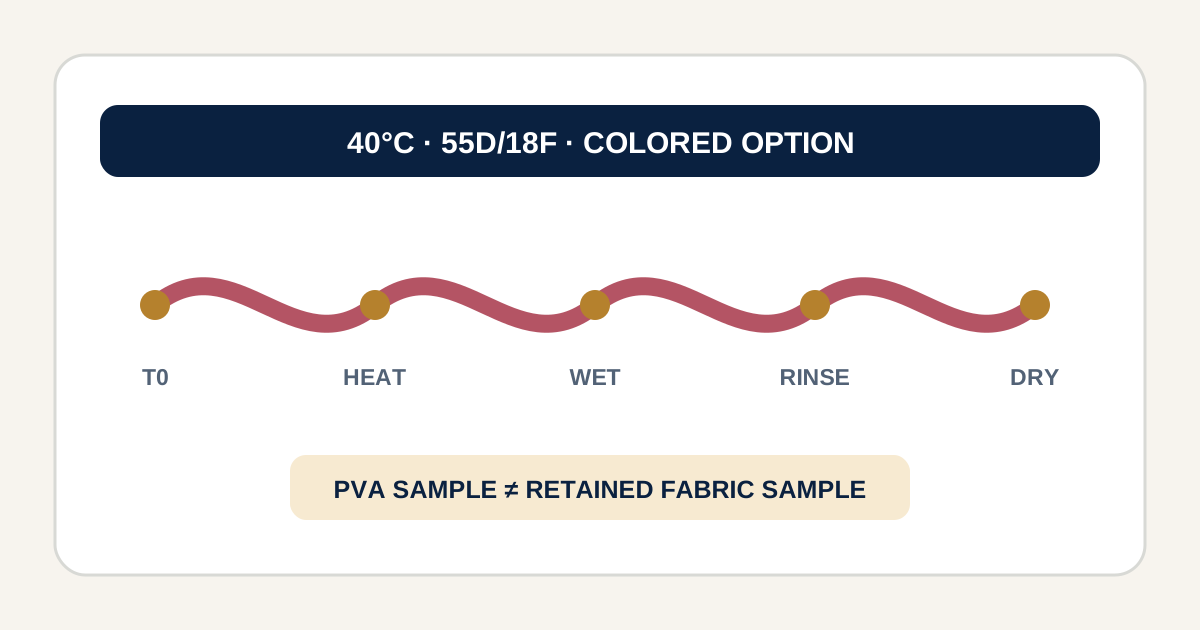
Treat “colored” as a catalog option that needs a written definition
The 2026 Three Thai catalog labels its 40°C colored PVA filament option red / blue and lists the model 55D/18F. That label does not say whether the two colors are exhaustive, identify colorant chemistry or intended visual purpose, establish colorfastness or migration behavior, or demonstrate compatibility with every dyeing and finishing route. Ask for the current written specification before using the color option as a process assumption.
First decide what the color needs to do in your process. It may be used as an identifier during a controlled trial, or the buyer may have another explicit requirement; do not guess which from the word “colored.” Then define where the PVA sits, which stages it encounters, when it is removed, and which color-related observations matter on the retained fabric. Keep the material's visible shade separate from the performance of the surrounding textile.
Start with the current PVA filament specification and confirm that the requested model and group match the quotation and sample label.
Define the color question before preparing specimens
Color is not a single pass-or-fail observation. A buyer may need to know whether the filament keeps its intended appearance through an early stage, whether any color becomes visible on a retained textile, whether a wet stage changes the shade, or whether the support is visibly gone after removal. Those questions require different checkpoints. Write the decision question and the acceptable observation for each one before selecting the sample size or process sequence.
- Obtain the supplier's description of the color option and preserve the quoted model code.
- Choose a representative retained fabric or yarn and keep an unexposed reference.
- Set how shade will be compared: the buyer's visual standard, a defined instrument method, or another agreed procedure.
- Mark sampling points before and after each heat, wet, rinse, and drying stage.
- Define separately what counts as acceptable support removal and acceptable retained-fabric appearance.
Put the color method in the trial brief rather than choosing it after an unexpected result. A visual comparison needs a named reference, defined lighting and viewing direction, a dry or wet state, and an identified reviewer. An instrument-based comparison needs the buyer's instrument method, specimen preparation, measurement locations, and interpretation rule. If a numeric color tolerance has not been approved, do not invent one for the trial; write down what the current decision owner will assess and obtain approval for a numeric method before it is used as a pass/fail limit.
A useful reference set contains labelled specimens from the start of the route, after the stages that matter, and after removal and drying. If production uses several chemical baths, record which bath each specimen represents and do not combine results from different stages in one photograph or measurement. Keep a control that follows the same handling but omits the candidate material when that helps identify changes in the retained construction; the buyer's process engineer should decide which controls answer the actual question.
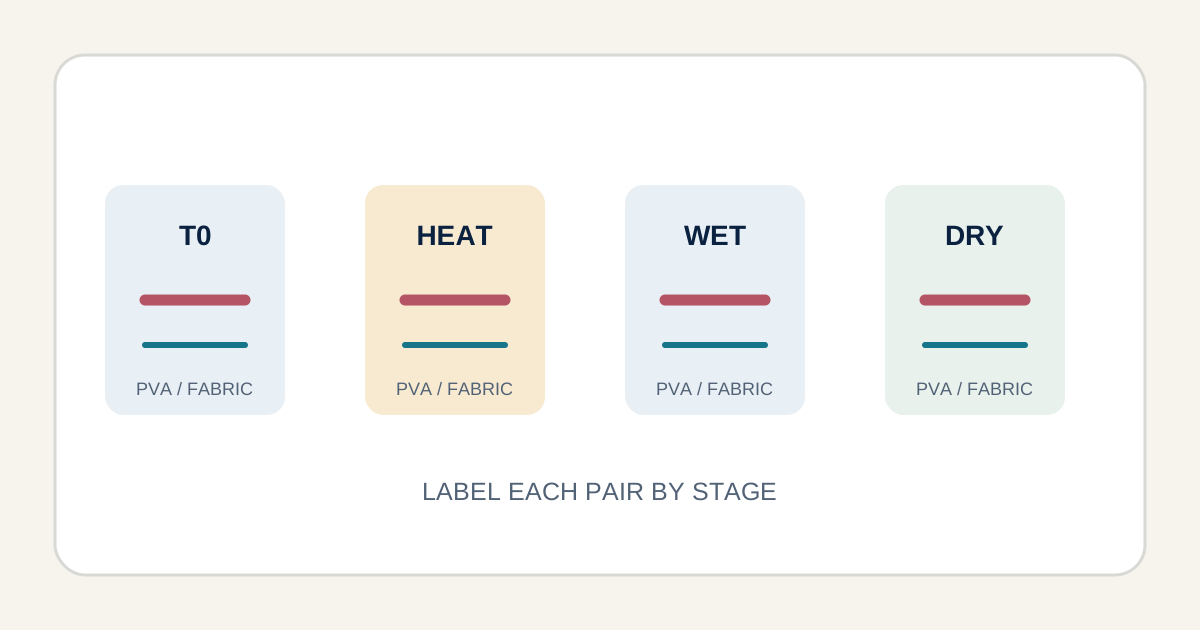
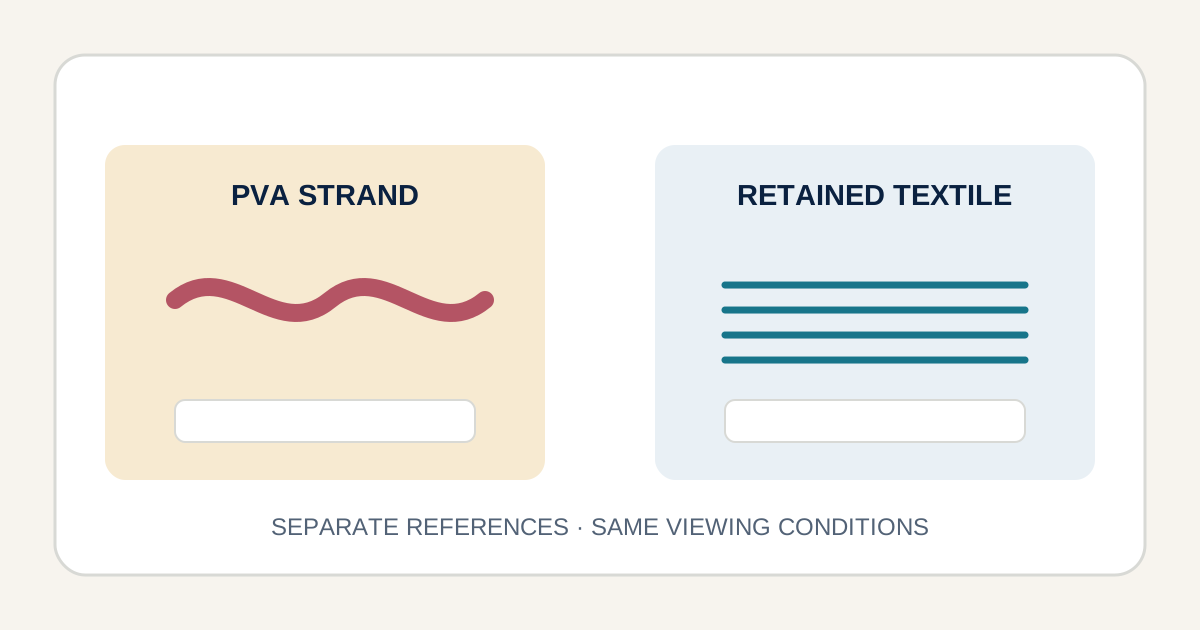
Separate filament shade from staining on the retained textile
After a wet or thermal stage, inspect two things separately: the colored PVA specimen and the material that remains in the final product. A visible change in the PVA strand is not by itself proof of a stain on the fabric; a changed fabric appearance is not by itself proof that the strand has been removed. Keep specimens labelled and compare each with its own reference under the agreed viewing or measurement conditions.
| Specimen | Observe | Record |
|---|---|---|
| Colored PVA filament | Shade, visible surface change, continuity, and remaining material | Model, lot, process stage, and observation method |
| Retained fabric or yarn | Appearance, any visible transfer, construction, and finished quality | Reference, location, stage, and buyer acceptance method |
| Wet process sample, if used | Visible liquid change or removable material collected | Bath identity, stage, and how the sample was handled |
Make the comparison repeatable by fixing the specimen location and how it is presented. For fabric, mark the inspected area and compare it with an unexposed reference of the same construction; for the temporary strand, retain an identified piece from the same lot. Note whether each sample is wet, rinsed, or dry, and use the same background and viewing setup. If different operators review the result, write down their individual observations before discussing them together. That keeps a disagreement visible instead of hiding it inside a single unqualified pass/fail note.
If the retained textile changes, investigate the sequence rather than assigning a cause to the PVA from appearance alone. Check the same textile without the colored filament, compare a specimen removed at an earlier stage if that is part of the approved plan, and review the actual process chemistry with the finishing team. These comparisons can narrow the question, but they are not proof of a specific mechanism unless the trial controls it.
Test the full route in the order production uses
A simple immersion of loose colored filament cannot answer whether it will fit a textile route. Place the sample in the same construction or a representative assembly, then apply the same sequence of dry handling, heat, wet treatment, rinsing, and drying that matters to production. Record actual conditions and order. If there is an early wet stage before the planned removal step, include it; otherwise a late-stage test may miss the exposure that controls the decision.
Use separate specimens for checkpoints that would destroy or alter the earlier observation. Label each sample with model, lot, position, process stage, and time of collection. Photograph with the same background, lighting, distance, and orientation if images are part of the review; if the decision requires instrument readings, use the buyer's agreed method and keep the raw result with the specimen identity. Neither a photograph nor a single reading replaces the written acceptance rule.
| Stage | Check | Keep for comparison |
|---|---|---|
| As received | Confirm model, lot, color description, and initial reference | Unexposed strand and retained textile |
| Before removal | Check the required function and any earlier color-related change | Stage-labelled material and recorded conditions |
| Removal and rinse | Assess the agreed removal endpoint and retained-fabric appearance | Separate PVA and textile observations |
| After drying | Review final construction and buyer-defined appearance criteria | Final specimen, reference, and written decision |
Before the run, assign an identifier to every specimen and pre-label the containers or record spaces for each checkpoint. Do not rely on memory to reconstruct which piece passed through which bath. If the line produces several positions or if a changeover occurs, identify those locations separately and say whether the set is a process map or a repeatability check. This lets the reviewer compare the same stage across specimens instead of comparing one stage from one piece with a different stage from another.
Investigate transfer or residue without guessing the cause
| Observation | Check next | Avoid concluding |
|---|---|---|
| A retained fabric looks different after processing | Compare its reference, location, bath sequence, and the no-filament control | That the PVA alone caused the change |
| Colored material remains visible after the planned removal | Confirm the endpoint, water access, specimen position, and inspection conditions | That the color label predicts a universal removal result |
| The strand changes shade in an earlier bath | Identify the bath, actual exposure, strand identity, and whether the change affects its job | That color change proves loss of function |
| Photographs appear inconsistent | Check lighting, scale, background, wet or dry state, and sample labels | A material difference from uncontrolled images |
First repeat the comparison with traceable specimens and the same viewing or measurement method. If an observation repeats, isolate a process variable that the team can control and change only that variable in the next run. Save the affected specimens and the process traveler so the supplier and mill can discuss the same material and stage. Describe the observation precisely; do not turn a tentative explanation into a product claim.
When writing the follow-up, state what the reviewer saw, where it was seen, which specimen and process stage it came from, and how it was compared with its reference. Then list the competing explanations the next controlled run is meant to distinguish. For example, the next run might hold the textile and viewing method fixed while changing one process exposure that the team has chosen to investigate. That plan can test a hypothesis; it should not be described as proof of a mechanism until the controlled evidence supports that conclusion.
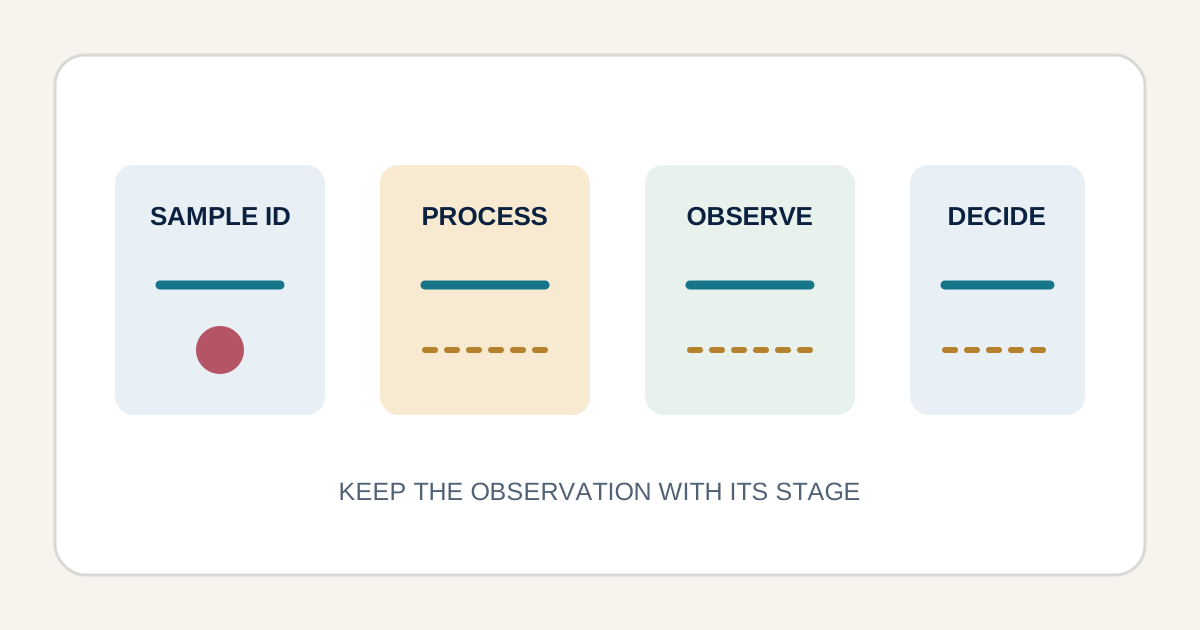
Write the color and removal criteria into the approval
A production approval should identify the colored filament model and specification revision, the textile construction, the process route, and the acceptance method for each result. State the retained-fabric appearance the buyer approved, how the temporary material's removal was judged, and which conditions must stay within the tested process window. If a later order changes the model, shade, package, chemistry, or sequence, record the change and decide whether another comparison is needed.
For a general trial sequence, use the sample-to-production testing guide. Mills handling colored fabrics can also review the dyed-towel support process guide for staged process mapping. Submit the construction and wet route with a PVA filament sample request.
Frequently asked questions
What color does the catalog's colored filament come in?
The 2026 catalog labels the 40°C colored-filament option red / blue. Confirm the requested color, current specification, and sample identity with the supplier; the listing alone does not establish colorfastness or process compatibility.
Does a 40°C label prove that color will remain stable through finishing?
No. The group label does not describe the complete finishing sequence or color outcome. Test the actual textile, chemistry, time, and process order that the mill intends to use.
How can I tell whether the strand or the fabric changed color?
Keep labelled references for the colored PVA and the retained fabric, then inspect each separately under the same agreed conditions. A change in one specimen does not establish the cause or result for the other.
Should color and removal be one acceptance result?
Keep them separate because they answer different process questions. Agree a color-related method and a removal endpoint independently, then review the dried textile against the buyer's final criteria.