
Technical guide · Technical Resources
PVA Staple Fiber in Knit Blends: Trial Distribution First
PVA staple fiber is mixed through a fiber mass rather than run as a continuous support yarn. Trace preparation, distribution, spinning and knitting before evaluating the intended retained or removable function.
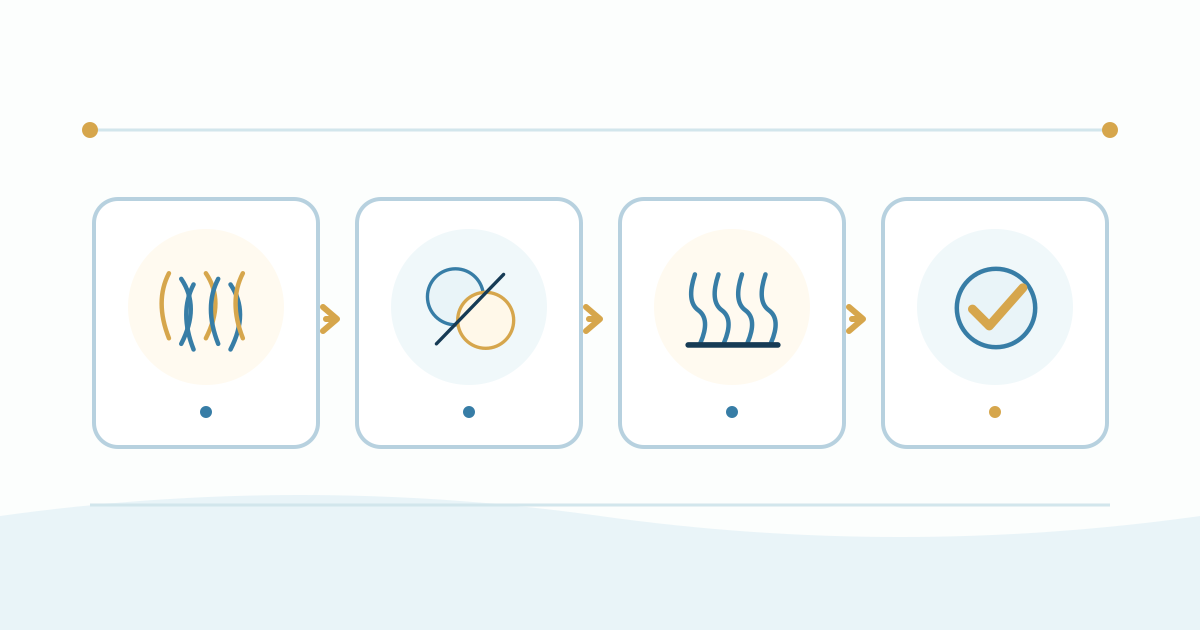
PVA staple blends succeed or fail in preparation
For a knit blend made with PVA staple fiber, begin by checking whether the fibers can be opened, fed, mixed and drafted into a consistent yarn; assess removal and finished-fabric behavior only after that blend route is traceable. Staple fiber is distributed through a fiber mass, not carried as a separate continuous support yarn. That makes feed uniformity, fiber compatibility and blend variation between sampled locations central questions. The trial should follow the fiber from opening through spinning and knitting, then test whether the chosen PVA grade responds as required in the intended wet process.
This is a different decision from choosing a plating or temporary support yarn that runs beside the main yarn. In a staple blend, the PVA is part of the spun yarn structure before the fabric reaches the knitting machine. If the PVA is unevenly distributed, the knit may show changing mass or loop behavior across the sample even when the overall blend ratio looks correct. If the fiber's water behavior is not the one required, a good-looking blend can still be wrong for the final route. Confirm both physical form and grade-specific water behavior before setting up a trial.
Keep staple blending separate from continuous support
A continuous PVA yarn has a defined path through the machine and can carry a chosen set of loops or a yarn core. A staple-fiber blend has no single path: individual fibers are opened and mixed into the companion fiber before they are spun together. During the trial, inspect this preparation history rather than treating every PVA-containing knit as the same construction. Ask whether the candidate is supplied as cut staple, how it is identified at receipt, and whether the planned equipment can process it with the other fiber lengths, finenesses and surface conditions.
The distinctions continue after spinning. A separate carrier yarn may be evaluated for running tension and route position. A blend needs checks for feed consistency, yarn evenness, cohesion and the way the yarn knits at the intended loop length. After removal, the companion fibers must still form an acceptable fabric. If the PVA is intended to remain as part of the final construction, removal is not the objective; the acceptance criteria should instead define retained contribution and performance. State this purpose clearly so a water-soluble trial is not mistaken for a retained-fiber specification, or vice versa.
A published knitted-fabric study compared architectures made with PVA staple blended into cotton yarn, PVA filament in a core, and PVA filament doubled with cotton. That is useful evidence that fiber form and yarn architecture are separate trial variables; its fabrics and wash route are specific to that study. See Mukhopadhyay, Ishtiaque and Uttam, Journal of the Textile Institute.
Plan how the fibers enter the blend
The sample plan should show the preparation sequence at the level needed to reproduce it: incoming fiber identification, opening, feed method, blending point, carding or other web preparation, drawing, roving if used, spinning and knitting. It should also identify the companion fiber and whether the two materials are prepared together or separately before a later blending step. These are trial variables, not a universal recipe. The appropriate route depends on the fiber specifications, available line and desired yarn construction, so record the chosen setup rather than copying an example from a patent or paper.
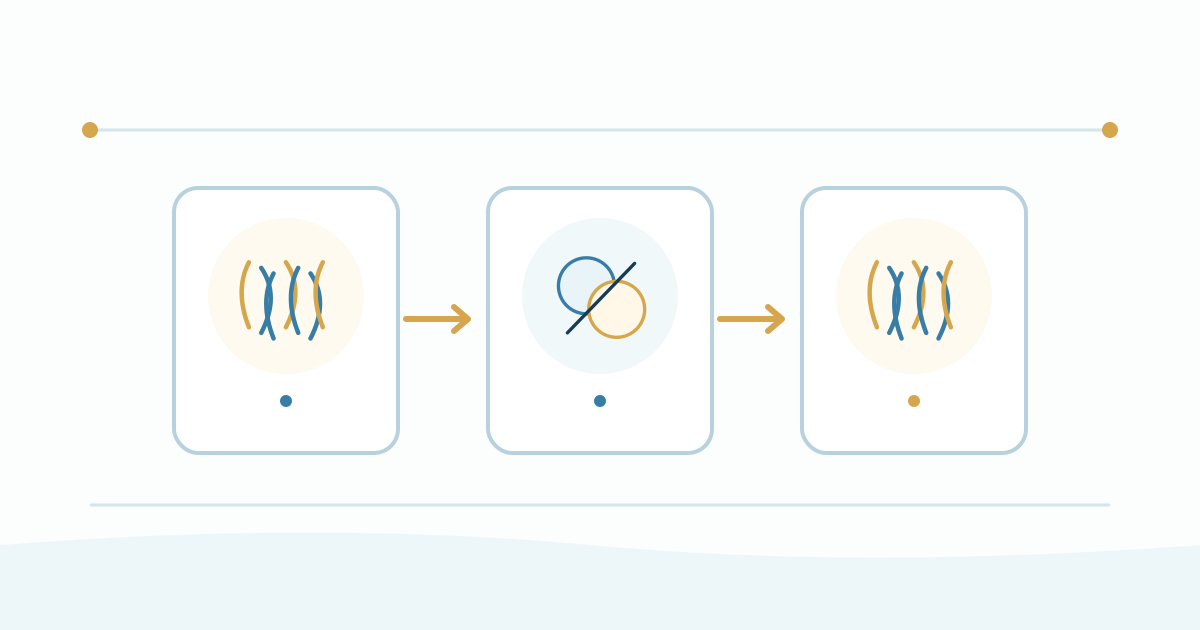
| Decision | What to record | Why it matters |
|---|---|---|
| Fiber identity | Lot, cut-length range, fineness and intended water behavior | Confirms that the trial uses the specified material |
| Preparation route | Feed point, opening method, blend stage and equipment identifiers | Makes a repeat trial comparable |
| Distribution | Sampling locations and the chosen visual or instrumental check | Finds local concentration changes that a batch ratio can hide |
| Yarn and knit | Yarn construction, knitting route, loop plan and observed defects | Tests whether the blend reaches the fabric as intended |
| Final role | Retain, partially remove or fully remove the PVA component | Sets the right post-process acceptance question |
A cotton/PVA fiber patent describes separate opening and preparation followed by blend formation, carding and further drawing as one way to build distribution through a sliver. Use that as an example of a sequence worth documenting, not as an instruction for another mill or as proof of a target uniformity. The route is described in US 2021/0340695 A1, Fibers, woven fabrics including the fibers, and methods of manufacturing the same.
Sample the blend before it disappears into the finished knit
Collect traceable checks at more than one point in the material route. Keep a reference of the incoming PVA and companion fibers, then identify where blend material is taken from the prepared web or sliver, the spun yarn and the knitted sample. A practical evaluation can include a visual distribution check on a representative cross-section, yarn evenness and break observations, and loop formation during knitting. If instrumented measurements are part of the mill's normal method, record the method and settings; do not invent a threshold from another fiber system.
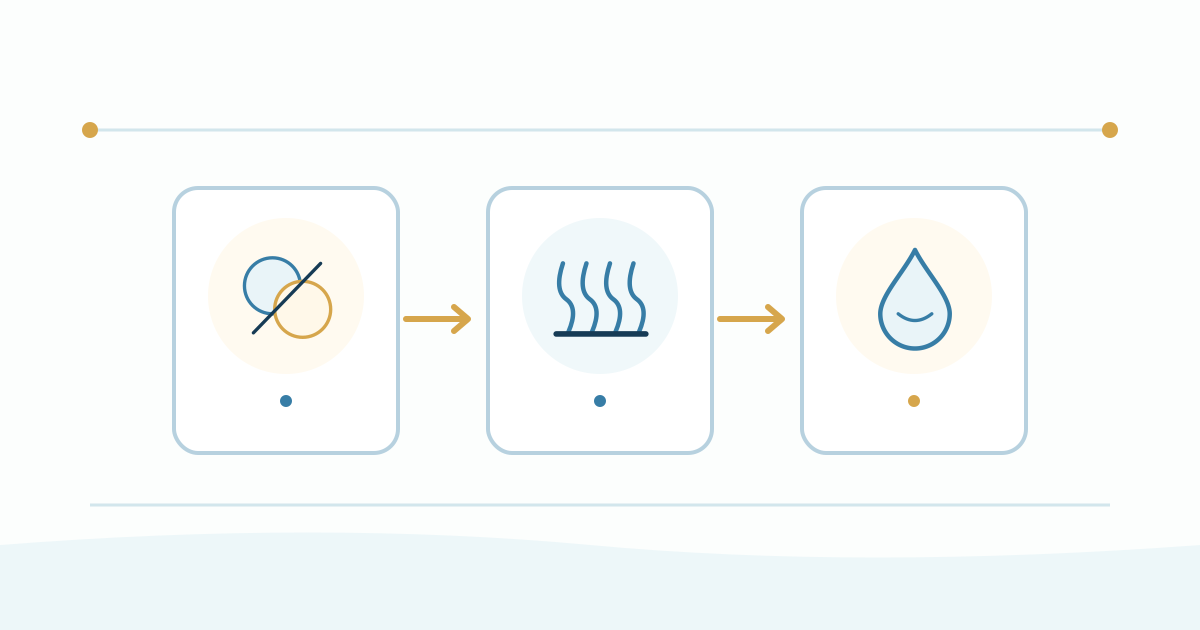
Only after the yarn and knit are identified should the team run the planned removal or retention treatment. A knit swatch can respond differently from a fiber bundle because yarn twist, fiber contact and loop density affect water access and how the remaining fibers settle. Keep one untreated comparison sample. Inspect the fabric after the actual bath and drying sequence, and note any change in dimensions, loop definition, handle, surface or visible residue. This separates preparation variability from post-process change instead of reducing the whole outcome to a single dissolution observation.
| Trial checkpoint | Record field | Review question |
|---|---|---|
| Incoming fibers | Supplier grade reference, lot IDs and available fiber specification | Does the received material match the agreed sample identity? |
| Preparation | Feed order, batch identifiers, blend point and line setup | Can the path be repeated without relying on memory? |
| Distribution | Sample locations, cross-section image and check method | Is the PVA present consistently in the sampled material? |
| Spun yarn and knit | Construction, machine route, breaks, unevenness and loop observations | Does the blend process and knit as the target structure requires? |
| Wet process and finish | Treatment sequence, endpoint, dimensions, hand and residue findings | Does the PVA's intended role match the resulting fabric? |
Set an acceptance rule for each checkpoint before running the trial. For example, decide which locations represent the lot, how distribution will be judged, what yarn or knit defects matter, and whether a removal check must be visual or analytical. Those rules belong to the buyer's construction and quality system; no single numerical tolerance applies to every blend. If a criterion is not yet available, record it as an open decision instead of inventing a pass level after seeing the sample.
Interpret changes without assuming the blend is uniform
A blend can have the requested overall formulation while still varying locally. Look for differences between samples taken from separate positions, changes in yarn body, uneven loop formation, local soft spots or openings, and concentrated residue after wet treatment. These observations can point to opening, feeding or blending variation, but they do not identify a root cause by themselves. Compare the preparation record and sample map before changing material ratios or machine conditions.
Removal can also alter the geometry of the remaining fiber assembly. A patent on water-soluble PVA fiber discusses low shrinkage as one design consideration for fine lace and blended yarn applications, reinforcing that the temporary fiber's dimensional behavior can matter after water treatment. Its claims and examples are specific to that patent. The fabric maker still has to determine whether its own loop structure retains the required size and appearance after the actual route. Read
EP 0636716 A1 on dimensional stability of water-soluble PVA fiber as bounded background, then apply the knit's own acceptance criteria.
For an initial route comparison, see the site's PVA staple fiber product page and knitting application page. Confirm the exact grade, cut form and water behavior for the trial; neither the product category nor the application page substitutes for a lot-specific sample evaluation.
Submit a blend brief that can be repeated
A useful brief identifies the companion fiber, target yarn and knit construction, the PVA staple specification available for review, preparation and spinning route, intended retained or removable function, wet stages, and final fabric criteria. Include the sample locations and methods the team will use to assess distribution. If the planned knitting line has a different feeder or yarn path from the pilot setup, note that before approval so the trial does not imply machine transfer without evidence.
Submit the information through the sample request page with the trial record attached. The result should name the evaluated lot, preparation route, knit construction, wet sequence and acceptance method. If any of those change, treat the next run as a new comparison rather than assuming the earlier blend result transfers unchanged.
PVA staple blend questions
Is PVA staple fiber the same as a PVA support yarn?
No. Staple fibers are mixed through a fiber mass and spun with companion fibers. A continuous support yarn follows its own path through knitting. The preparation equipment, distribution checks and failure modes differ, so state which form the trial uses.
Does a stated blend ratio prove even distribution?
No. A batch ratio describes total material proportions, not local distribution in the prepared web, sliver, yarn or knit. Identify sampling locations and the method for checking distribution before approving the blend.
Can every PVA staple fiber be removed with water?
No. PVA fiber grades are not interchangeable in water behavior. Confirm whether the specific fiber is intended to remain, dissolve or respond under a defined process, then test it in the knitted construction and its companion-fiber system.
What should a blend trial record include?
Record fiber identity and lot, feed and preparation sequence, sampling locations, distribution check, yarn and knitting observations, wet-process endpoint, and post-process fabric criteria. That record lets a team compare runs and locate which part of the route changed.