
Technical guide · Technical Resources
Water-Soluble PVA Yarn Storage: 6 Checks Before Use
Water-soluble PVA yarn should stay identified and protected from moisture before use. Check its pack, grade and lot, review actual storage and transit records, watch for condensation after temperature changes, reseal opened stock, and confirm unwinding with a representative small trial. This guide covers six practical checks without assuming a universal humidity limit or shelf life.

Keep it identified, sealed and dry before the first run
Store water-soluble PVA yarn in intact original packaging, away from moisture, with grade and lot traceable. Before use, inspect the pack and label, review storage and transit records, keep cold packs closed while they adjust, reseal leftovers, and confirm unwinding and performance with a representative small trial. These six checks flag handling questions before production.
No universal humidity limit, storage temperature or shelf life applies to every grade. Follow supplier instructions and retain actual site records. Studies of PVA films and fibers support checking moisture exposure but cannot set limits for a specific yarn.
- Inspect the pack before opening.
- Match grade, count and lot to the order.
- Review storage records.
- Check for condensation after transit.
- Reseal leftovers with identification.
- Check unwinding and run a small trial.
Check 1: Inspect the package before opening
Check the carton and inner moisture-barrier bag for punctures, torn seams, water marks, crushing or an open seal. An intact carton does not prove the inner pack is sealed. Record damage before moving or opening the package.
Photograph the shipping and lot labels, damage and visible moisture before opening. Keep the photos with the receiving record so the supplier can assess when the issue may have occurred.
Check 2: Match the grade, count and lot
Compare the package label with the purchase order and approved sample. Confirm material, grade or dissolution target, count and construction, package format, lot reference and handling note. Color, feel or a handwritten shelf label cannot identify the grade by themselves.
If labels conflict or the lot cannot be matched to the order, pause release and ask the supplier to confirm the specification in writing. A correct count does not resolve a grade mismatch. Keep the confirmation with the lot record.
Compare the label with the water-soluble PVA yarn range. For a temporary sewing thread, check the separate water-soluble PVA sewing thread range.
Check 3: Review the storage and environmental record
Review arrival date, storage location, whether the pack stayed closed, and any temperature or relative-humidity readings your site records. Note gaps instead of filling them with an assumed average. Compare the available record with the supplier's storage instructions and flag unaccounted periods.
Keep research separate from product specifications. Miyake and co-authors studied moisture absorption and tensile properties in PVA fibers; Konidari and co-authors studied sorbed water and mechanical behavior in PVA films. These studies support checking moisture exposure, but the film results cannot set a yarn humidity threshold, shelf life or acceptance rule.
See the studies on moisture absorption in PVA fibers and moisture-related changes in PVA films. Neither replaces grade-specific yarn instructions.
Check 4: Protect a package moving between warm and cold areas
Keep a cold package closed while it adjusts to the receiving or production area. Opening it too soon can expose the cool package to warmer, moisture-bearing air. NOAA defines dew as moisture condensed on an object below the dew point, explaining why a temperature change can leave surface moisture without a spill.
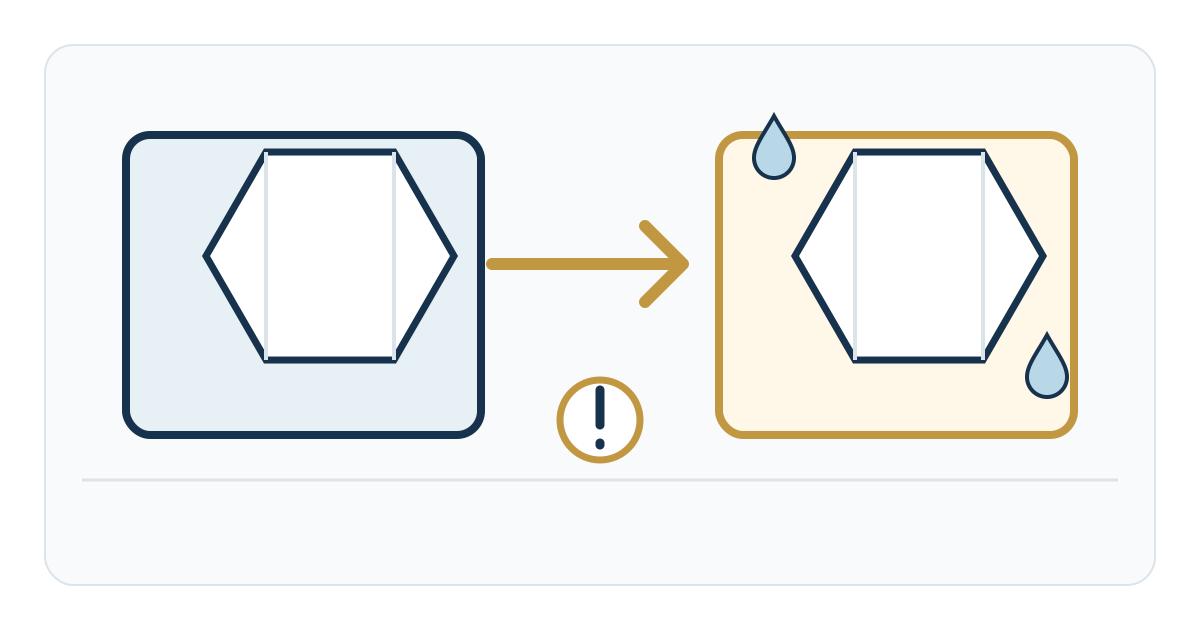
The National Weather Service glossary defines dew and dew point. Check the pack and supplier instructions before opening; no single waiting period applies to every shipment or room.
Look for fogging, droplets or a damp bag or cone. If present, keep the pack closed, mark it on hold, photograph it and record transit conditions. Do not load it or assume surface drying leaves the yarn unaffected.
Check 5: Protect the unused portion after opening
Prepare a clean place for yarn that will not go straight to the machine. Return the remainder to its original barrier pack or another supplier-approved pack, close it promptly, and keep its product and lot label attached. If tracked, note the opening date and remaining amount.

Keep yarn away from wet floors, wash areas, open windows, water and steam. Do not reseal visibly damp stock as if it were protected. If the pack uses desiccant, follow its instructions; adding desiccant does not establish that exposed material has been restored.
Check 6: Confirm unwinding and make a representative small trial
Before a full run, check that the package is seated correctly and the yarn unwinds as intended. Watch for sloughing, crossed wraps, drag, sticking or repeated breaks. Record what you observe and compare it with an approved package; the symptom alone does not identify the cause.
Run a small trial that represents the actual construction and process. For wet-stage removal, record bath conditions and the agreed endpoint; a loose strand in a beaker does not reproduce production access, tension or construction. Compare with the approved sample and acceptance criteria before scaling up.
Use the sample-to-production testing guide to carry trial conditions forward; PVA dissolution in textile processing explains why construction and bath conditions affect removal.
Keep one short record with the lot
| Check | Record | Decision or follow-up |
|---|---|---|
| Package | Seal, visible damage, photos and receiving date | Release, or hold for review |
| Identity | Product, grade, count, package and lot references | Match order and approved specification |
| Storage | Recorded conditions, location and any unobserved period | Compare with grade-specific instructions |
| Transit | Temperature change, visible condensation and package condition | Keep closed and investigate if damp |
| After opening | Opening date, remainder location and reseal condition | Preserve lot traceability |
| Trial | Machine path, process conditions and acceptance result | Release only against agreed criteria |
Record observations, the comparison reference, release decision and action for exceptions; do not invent thresholds. This lets the next shift trace its decision to the same lot.
If anything looks wrong, isolate it and report the evidence
Isolate a pack with a broken barrier, visible moisture, conflicting label, unexplained storage history or trial result that differs from the approved reference. Mark it on hold and separate it from released material. Do not mix, relabel from memory, dry or reuse it without supplier review and an agreed disposition.
Photograph the labels, seal, cone and affected yarn. Send the supplier the lot and order references, available dates and conditions, when the difference appeared, and any trial method. Ask whether to use, evaluate or continue holding the lot, and file the response with the record.
Confirm parameters before requesting a sample
Give the supplier enough information to choose a comparable sample and confirm parameters before shipping. Include the application, yarn or thread form, count, construction, machine or stitch route, package format, tolerated wet-process conditions and acceptance criteria. For a storage question, include actual records and photos, not a guessed humidity history.
Use the sample request form to state those needs. Ask the team to confirm grade, lot identity, package instructions and trial conditions in writing, then keep those details with the evaluation.
Frequently asked questions
Can I store water-soluble PVA yarn like ordinary yarn?
Follow the grade-specific instructions, keep its identity and protective packaging intact, and record monitored conditions. PVA studies support attention to moisture exposure but do not give every yarn the same storage recipe.
What temperature or relative humidity should the store room meet?
Use the current requirement on the applicable specification or package. Do not transfer a number from a film study, another supplier's filament or a different yarn grade.
How long can an opened package be kept?
Check the product documentation and supplier guidance; no universal opened-package shelf life is established here. Keep the remainder identified, sealed as instructed and traceable to its opening record.
How long should a cold package wait before opening?
Keep the barrier closed while the package adjusts, then check for condensation and follow supplier instructions. If it is damp or fogged, isolate and report it before use; no fixed wait applies to every shipment.