
Technical guide · Technical Resources
PVA Fiber Lengths: Choose Between 4 mm, 38 mm, and 76 mm
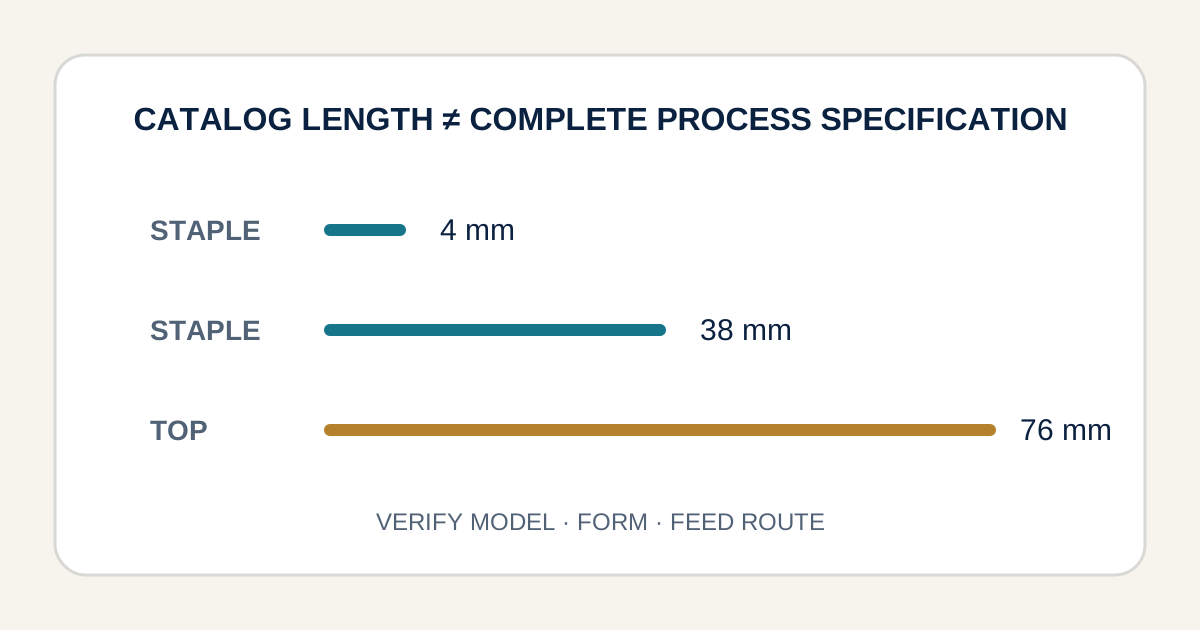
The catalog lists 4 mm and 38 mm under Staple and 76 mm under a separate Top family. This guide helps buyers compare the complete catalog row, identify the actual feed point, and design a representative trial without assuming that length alone predicts handling or process performance.
Read the length and product form together
The 2026 Three Thai catalog lists PVA fiber options with 4 mm and 38 mm lengths under the Staple group, and a 76 mm option under the separate Top group. These entries are not one continuous size range of interchangeable staple. The group name and listed length both matter: a buyer should preserve the catalog's product form, model, and length when requesting a sample, then verify the physical presentation with the supplier.
Length is only one selection field. The catalog also lists different model identifiers and temperature groups across these rows, so a comparison may change more than length at once. Do not infer a machine route, blending ratio, removal result, or finished-fabric property from the length value alone. Start by identifying where the material enters the process and what function it must perform there.
| Catalog family | Listed examples | Selection note |
|---|---|---|
| Staple, 4 mm | 1D and 2D at 70°C; 2D at 80°C | Confirm the exact model and group |
| Staple, 38 mm | 1.2D and 1.5D at 80°C; 1.2D and 1.4D at 90°C | Do not compare the length alone when other fields differ |
| Top, 76 mm | 2D at 40°C and 70°C | Keep Top separate from the Staple family |
Use the row to ask a process question, not to guess an answer. A 4 mm short-cut option, a 38 mm staple option, and a 76 mm Top option point to different catalog forms, but the mill must still explain how each candidate will be received, prepared, and introduced. The buyer should tell the supplier whether the route begins with a dispersed stock, a spinning preparation, or another defined stage. If the equipment or product name is unfamiliar to the supplier, send a simple route sketch and the output requirement before requesting a recommendation.
Define the route before choosing among lengths
The first question is where the PVA enters the line. Is it dosed into a fiber mix, fed to a preparation stage, incorporated into a spun strand, or supplied as an intermediate form for another operation? Name the equipment and the downstream output. A length that can be handled at one stage may be unsuitable at another, and a catalog dimension cannot replace a trial on the actual feed and preparation path.
Next, define the temporary or retained job. If the material is intended to leave, record which processes it must survive before removal and what the accepted removal endpoint is. If it remains in the product, state what role the fiber should play and which finished properties the buyer will check. Do not combine these aims in one vague description such as “PVA fiber for fabric”; a clear role determines the trial and its acceptance record.
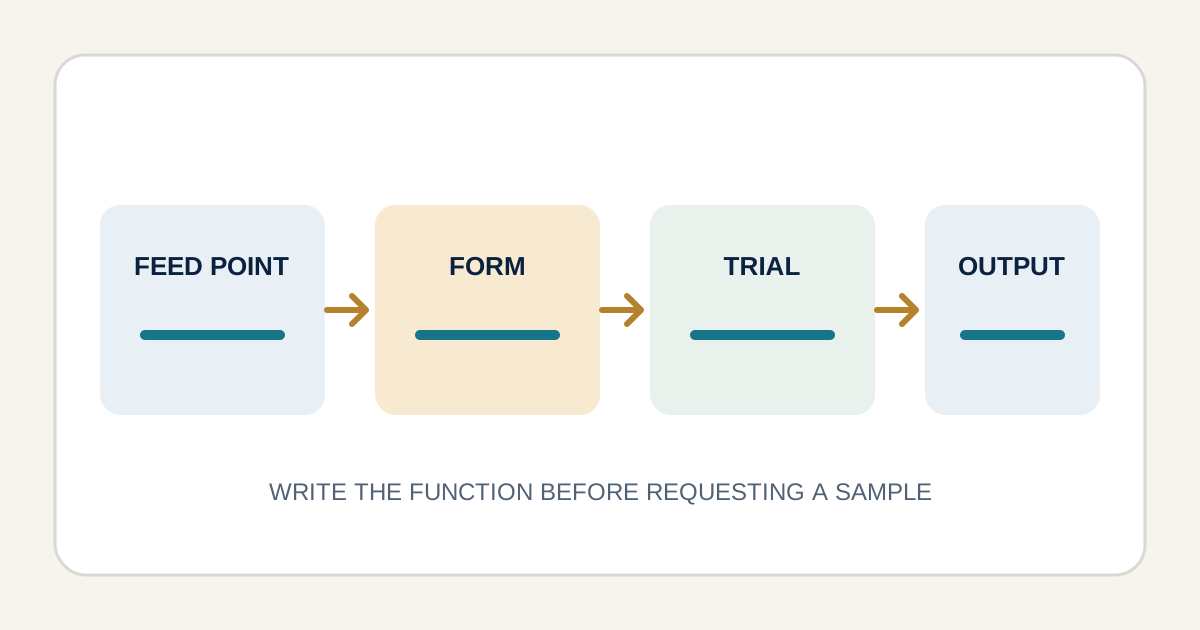
- Mark the exact operation where the sample will enter.
- Describe how the material is opened, weighed, metered, or transferred at that point.
- Name the next operation and the structure or sheet the line is expected to produce.
- State whether the PVA should remain, change a dimension, bind, support, or be removed later.
- Identify the product, process, and removal checks that decide the trial.
A useful route sketch can be short: name the incoming form, the first operation, each point where another material is added, and the output that will be inspected. Mark any stage that can alter the sample identity or make the PVA difficult to separate from other inputs. This is a process map, not a claim that every line needs an extra operation. Leave out stages that do not exist in the mill; the purpose is to reproduce the actual route rather than an idealized one.
Compare catalog entries without changing several variables silently
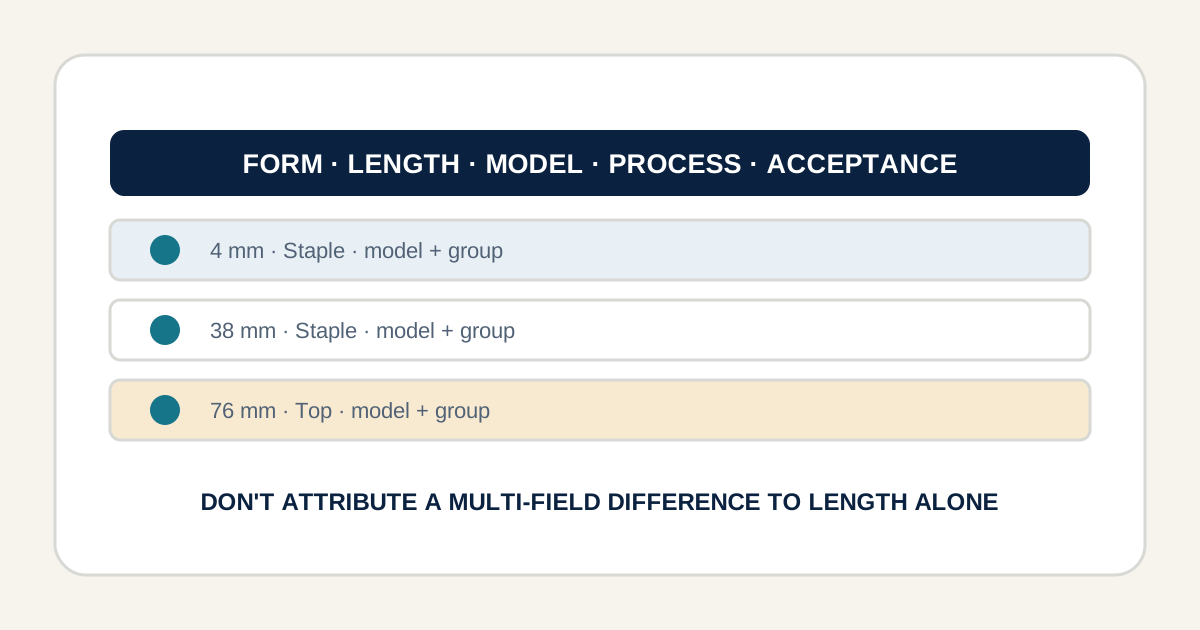
A table can make the first screen easier, but it does not make different rows a controlled experiment. For example, the 4 mm options, 38 mm options, and 76 mm Top entries differ in family, model identifier, and in some cases temperature group. If two candidates differ on several fields, test each as its own candidate against the same written process brief. Do not describe a difference in the finished sample as the effect of length alone.
| Field | Copy from the approved offer | Question to close |
|---|---|---|
| Product form | Staple or Top, using the supplier's exact term | What physical form will arrive? |
| Model and length | Complete catalog identifier and listed millimetres | Does the sample label match the requested row? |
| Process group | Catalog group and stated process condition | What does the group label specify, and what must be trialled? |
| Package and quantity | Supplier-confirmed delivery form and trial amount | Can the receiving and feed equipment handle it? |
| Acceptance | Written feed, output, removal, or retained-product checks | What observation passes each stage? |
If the comparison must isolate length, ask whether the supplier can provide candidates with the other material and process fields held as close as possible. If that is not available, record the full difference between candidates and treat the result as a product comparison, not a controlled length study. That distinction makes the result useful for purchasing without overstating what the experiment learned.
Run a representative trial and record what happens
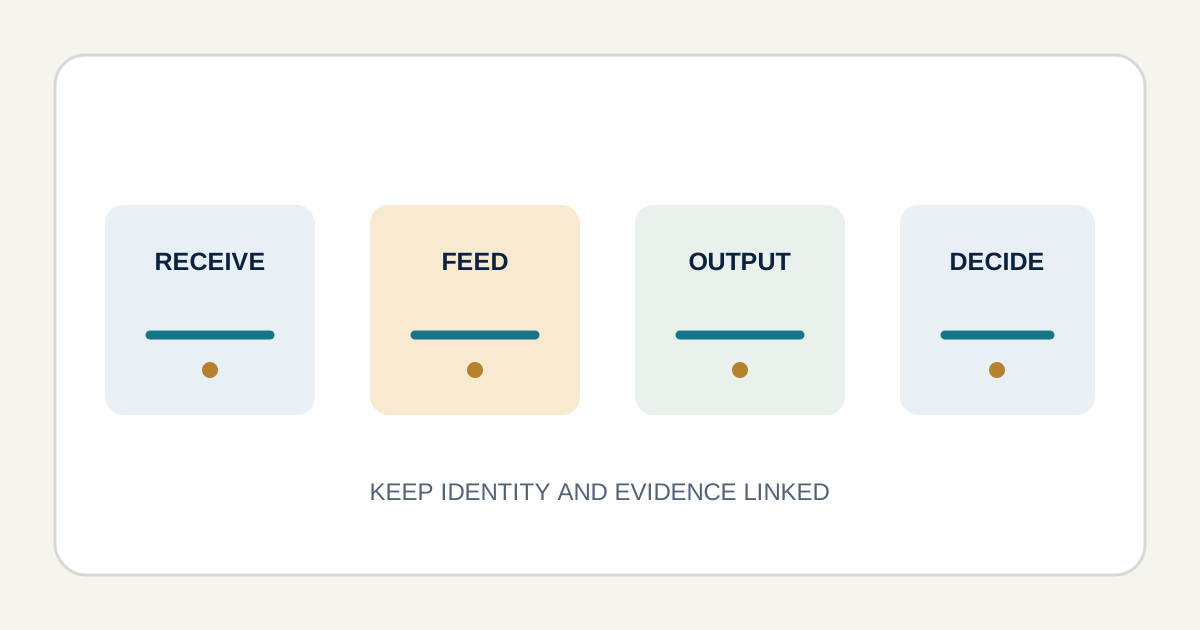
Use a sample that reproduces the material's real feed path. Record the receiving package, opening or transfer step, feed setting, relevant machine route, and the output quantity or specimen the buyer will inspect. Keep the material and process identity attached to each sample; if the line changes to another candidate, mark the changeover rather than combining the results under one product name.
Inspect at more than the end of the line. Note whether the material feeds as planned, whether the next process runs as expected, and whether the output has the intended structure. If PVA is intended for later removal, carry a representative specimen through the real wet or thermal sequence and define what counts as removed. If it is intended to remain, use the buyer's finished-product checks. These outcomes should be reported separately so one successful stage does not mask a problem at another.
| Stage | Record | Why it belongs in the decision |
|---|---|---|
| Receipt | Family, model, length, lot, package, and specimen identity | Links the trial result to the delivered sample |
| Feed and preparation | Opening, transfer, metering, machine path, and operator observations | Shows how the chosen form entered the process |
| Output | Produced structure and buyer-selected quality checks | Tests the intended role at the point it matters |
| Removal or retention | Removal conditions and endpoint, or the retained-fiber criteria | Makes the final material decision explicit |
Where the route permits, keep a sample from each named stage instead of relying on a single finished piece. Label the material before opening the package, then preserve that identifier on any prepared stock, intermediate strand, and final specimen. If a test is stopped early because the sample cannot pass a feed point, record which operation stopped the run and what evidence was available; do not report a downstream quality result that was never produced. This makes even an incomplete trial useful for choosing the next candidate or correcting the process plan.
Use the result to narrow the next sample request
If the first candidate does not feed or produce the required output, identify the stage where the result diverged from the brief. Check whether the sample matched its label, whether the process followed the recorded route, and whether the acceptance method was applied as agreed. Then choose one change for the next run: a different catalog form, a corrected feed setup, or an adjustment to the trial method. Keep the old result linked to its original specimen instead of overwriting it with the next candidate's record.
A more useful request states why another length or form is being considered. For instance, the team might need to evaluate a different feed point or reduce an observed handling interruption; those are hypotheses to test, not properties guaranteed by a millimetre value. Ask the supplier to confirm current availability and physical presentation, and set the next trial's outcome before the new sample arrives.
For product examples, see the PVA staple fiber specification. Existing knit-blend trial guidance, wet-laid nonwoven guidance, and papermaking fiber guidance describe different process questions. Send your own route and sample requirement through the sample request form.
Avoid three length-selection mistakes
- Treating the 76 mm Top entry as though the catalog placed it in the Staple family.
- Comparing 4 mm, 38 mm, and 76 mm rows while ignoring differences in model or process group.
- Assuming a fiber length predicts opening, distribution, support, removal, or finished-product performance without a line trial.
The correction is to quote the complete catalog row, describe the feed point, and record the process conditions and result for the sample actually run. If the buyer needs a single-variable length comparison, state that objective before sampling and align the other fields with the supplier. If the available products differ on more than length, write that limitation into the trial record so the decision remains accurate.
Frequently asked questions
Are the 4 mm and 38 mm options both listed as staple?
Yes. The 2026 catalog lists 4 mm and 38 mm entries in the Staple family. Confirm the exact model and process group because other fields vary across the rows.
Is the 76 mm option another staple length?
The catalog lists the 76 mm option under the separate Top group. Keep that family distinction in the sample request and ask the supplier to confirm the delivered form.
Does a longer PVA fiber always feed differently?
The catalog length alone cannot determine how a particular machine will feed the sample. Test the delivered form on the intended opening, transfer, metering, and machine route.
Which length should I request first?
Start with the catalog row that matches the process point and function in your brief. If the form is uncertain, describe the equipment and output to the supplier rather than guessing a size.