
Technical guide · Technical Resources
Garment Temporary Basting Trial: Seam Function and Wet-Sensitive Layers
Treat water-soluble PVA thread as a candidate for temporary garment basting only when the seam's job and removal route are defined. Map which panels or components it must keep aligned, how long that hold is needed, when permanent stitching takes over, and whether the finished assembly can tolerate the proposed wet step. Keep load-bearing seams and permanent construction stitches on their own approved specification.
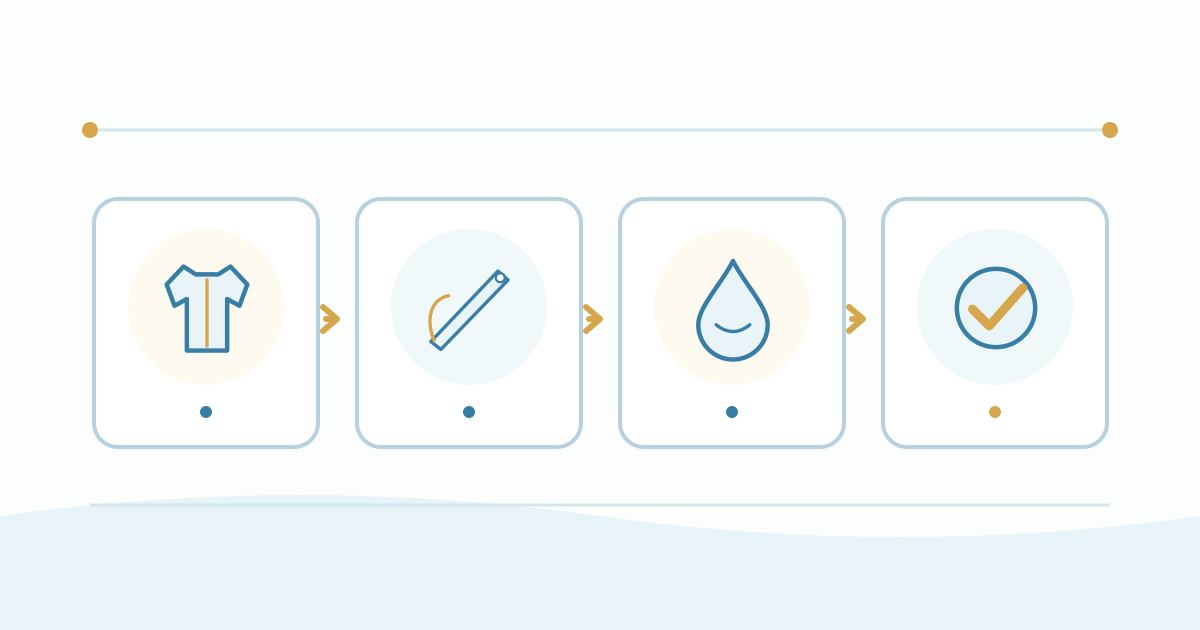
Decide what the temporary seam must hold
Treat water-soluble PVA thread as a candidate for temporary garment basting only when the seam's job and removal route are defined. Map which panels or components it must keep aligned, how long that hold is needed, when permanent stitching takes over, and whether the finished assembly can tolerate the proposed wet step. Keep load-bearing seams and permanent construction stitches on their own approved specification.
A useful trial asks whether basting holds through sewing and handling, then leaves without unacceptable change to the retained garment. Water response alone is not enough; consider the garment, dyes, interfacing, trims, and finishing route together.
Map the garment assembly route first
Start with the sequence. Mark the temporary stitch on the pattern and list the layers it joins: shell, lining, facing, interlining, pocket, cuff, collar, or trim. Show cutting, turning, permanent sewing, pressing, and wet treatment. A path accessible on an open panel may be trapped inside a finished edge.
Mark movement, the point when each component becomes self-supporting, and crossings with permanent seams, topstitching, buttonholes, zippers, or elastic. The map shows what basting supports and what marks or holes the buyer will inspect after removal.
Separate the basting job from the final seam
Basting locates pieces for later operations; it does not replace the final seam. State whether the line controls panel slip, a fold, a curved edge, or trim placement. Record relevant handling and operator steps.
One garment patent describes holding layers aligned through permanent sewing, then removing low-melting thermoplastic thread with heated absorbent sheets. It shows a basting role and route-specific removal, not PVA behavior or a water-based process. See the patent for this distinct thermoplastic route:
Decision table: match the basting role to garment risk
Use this matrix to set what the first sample must prove.

| Garment situation | Temporary hold to verify | Removal and retained-part check |
|---|---|---|
| Open washable panel | Alignment through sewing | Line, surface, and size after wet treatment |
| Facing, cuff, or enclosed edge | Hold fold until closure | Check access and finished edge |
| Interlining or adhesive layer | Prevent layer shift | Check bond, bubbles, and shape |
| Dark, printed, or contrast panels | Control stitch location | Check transfer, staining, and marks |
| Permanent or load-bearing seam | Do not replace the final seam | Qualify permanent stitching separately |
If a garment cannot tolerate the wet step, revise the construction or compare another temporary method.
Check water-sensitive components as one assembly
List every component exposed to removal: dyes and prints, interlining, coatings, elastics, trims, labels, adhesives, and items sensitive to wet handling or drying. Care labels help define limits but do not prove compatibility with a new route.
Set a control area away from the stitch, then compare under the same light and handling. Use buyer criteria for shade, surface, hand, bond, shape, and seam appearance. Test the exact layered construction if the route affects a protected finish.
Choose an accessible removal window
Choose whether removal occurs before or after final sewing, pressing, washing, or turning. Early removal leaves access but may release a part too soon; later removal extends support but may bury thread under folds, seam allowances, or trims. The sequence depends on the garment.
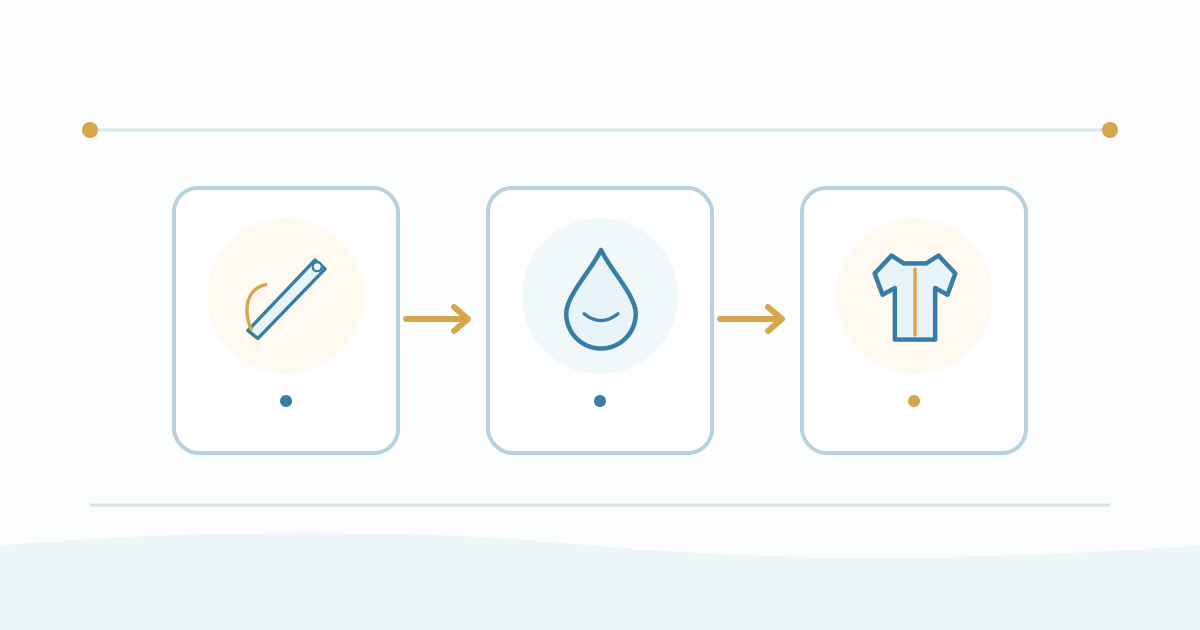
Test hidden and crowded zones. Define an endpoint: no visible thread or residue, pulled yarns, marks, or distortion, as the buyer requires. Treatment that cannot reach a trapped stitch is incomplete.
Use seam and care methods within their scope
ASTM D6193 classifies stitch and seam types and discusses strength, security, and appearance; use it to document construction, not prove PVA removal. ASTM D1683/D1683M measures failure in woven-fabric seams and does not predict actual wear. Its results cannot replace removal or garment-compatibility trials.
ASTM D6193; ASTM D1683/D1683M; and AATCC TM150 provide defined frameworks for seam construction, woven-seam strength, and garment dimensional change after home laundering, respectively. TM150 does not test soluble basting-thread removal. Apply a standard only when its scope and buyer protocol fit the question.
Run a matched garment-assembly trial
- Prepare matched garment sections with the production fabric, layers, trims, basting path, stitch, and permanent seam.
- Record machine, needle, thread path, settings, operator steps, and the handling sequence before permanent sewing.
- Run the actual assembly route, then apply the proposed removal and drying process to the complete layered construction.
- Inspect exposed and enclosed stitch locations for hold, access, visible thread, residue, color, marks, layer bond, and shape.
- Compare each result with the agreed control and acceptance criteria; preserve both passing and failed pieces.
A loose thread or single-layer swatch is only an early screen. It cannot show panel slip, restricted water access, dye transfer, or interlining changes. Evaluate later garment laundering separately against the finished article's requirements.
Diagnose failure by the stage where it appears
If layers shift before final stitching, revisit basting location, feed direction, handling, and required hold. If thread breaks during sewing, inspect machine path and construction as well as thread. If hidden segments remain, check access and assembly order before changing removal conditions.
If shade, surface, bond, or dimensions change, compare the affected component with the untreated control. Change one variable at a time and keep the failed sample. Do not intensify treatment by default; it may solve one symptom while damaging another layer.
Trial record and sample request
| Record item | What to capture | Decision it supports |
|---|---|---|
| Construction | Pattern location, layers, stitch, and permanent seam | Defines the actual basting job |
| Materials | Fabric, dye or print, interfacing, trims, adhesive, and care limits | Identifies sensitive components |
| Sequence | Machine, handling, permanent sewing, removal, and drying | Shows when support is needed and when it can leave |
| Outcome | Position, visible thread, residue, shade, marks, bond, and shape | Ties approval to the retained garment |
Review the embroidery and sewing application and the water-soluble PVA sewing thread with the proposed stitch role. The sewing-thread overview covers general thread selection; send the garment layers, basting map, removal route, and buyer criteria through a sample request. A matched trial must establish fit for the specific garment.
Garment basting questions
Can water-soluble thread replace the permanent seam?
No. The trial evaluates a temporary hold only. Specify and qualify the permanent seam for its own structural and wear requirements.
Should basting be removed before or after permanent sewing?
Test the sequence that provides enough support while keeping the stitch accessible and protecting the garment. The correct point depends on the assembly.
Will a wash-away route suit garments with interfacing or trim?
Do not assume compatibility. Test the full layered garment with its dyes, bonds, elastics, finishes, and trims under the proposed route.
What proves the basting has been removed?
Use a buyer-defined endpoint that checks thread and residue at exposed and hidden locations, plus retained fabric appearance, layer bond, and shape.