
Technical guide · Technical Resources
PVA Top/Sliver Feed Trial: Map the Route Before Sampling
A catalog's Top/Sliver label does not settle whether the delivered form matches a mill's meaning of sliver. Learn how to confirm the physical presentation, map each handoff from receiving to output, and keep feed, removal, and final-product decisions tied to separate evidence.
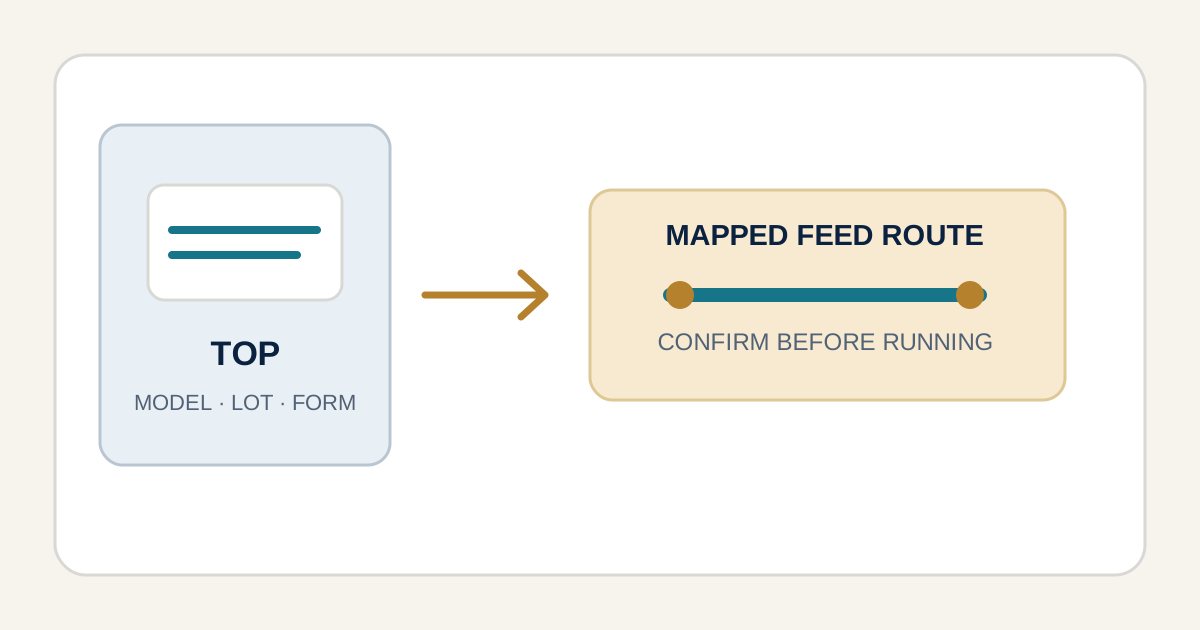
Confirm the delivered form before calling it a sliver
The 2026 Three Thai catalog labels one PVA staple-fiber product group “Top/Sliver” and lists a 76 mm option in that group. A buyer who needs a sliver or another intermediate form should not assume that the catalog word “Top/Sliver” means the material will arrive in the physical format their machine expects. Ask the supplier to confirm the delivered presentation, package, identification, and preparation condition before writing the process route or sample requirement.
This detail matters because the feed route starts at receiving, not at the machine's first roller. The delivered form determines what the operator can inspect, how the sample is identified and handled, and which preparation steps must be reproduced. Keep the supplier's exact product-family label and model code in the record; add the buyer's process term only after both sides agree what it describes.
| Question | Capture | Why it matters |
|---|---|---|
| Product identity | Catalog family, exact model, lot, and written specification | Keeps the physical sample tied to its offer |
| Delivered form | Supplier description, package, and preparation state | Shows what the receiving team will actually handle |
| Buyer terminology | Whether “Top” and “sliver” refer to the same required form | Prevents a vocabulary mismatch at the feed point |
| Trial destination | Machine, preparation step, and downstream product | Defines the relevant sample route |
Ask the supplier to describe the delivered form in terms the receiving and preparation teams can verify: how the material is packaged, whether it is presented as a continuous assembly or another form, what support or wrapping is removed before use, and which label identifies the specification and lot. These questions do not presume that one presentation is better. They establish the starting point of the trial and expose a mismatch between a catalog term and the mill's equipment before a sample is sent.
Map each stage from receiving to the intended output
Draw the route in the order the sample will follow. Begin with package receipt and identity check, then show any opening, transfer, blending, drafting, drawing, feeding, or spinning stage that actually belongs to the buyer's process. Mark each machine or handoff point where the material can be disturbed or combined with another input. A route map should describe the mill's equipment; do not copy a generic spinning diagram and assume it matches the line.
At every handoff, record what goes in, what comes out, and what measurement or observation will determine whether the stage worked. If the material is blended, specify the buyer's blend formula and the weighing basis; do not invent a ratio from the sample length or catalog group. If the route includes drafting, record the actual settings and output form that the mill wants to compare. These details make it possible to tell a product question from a feed-preparation question.
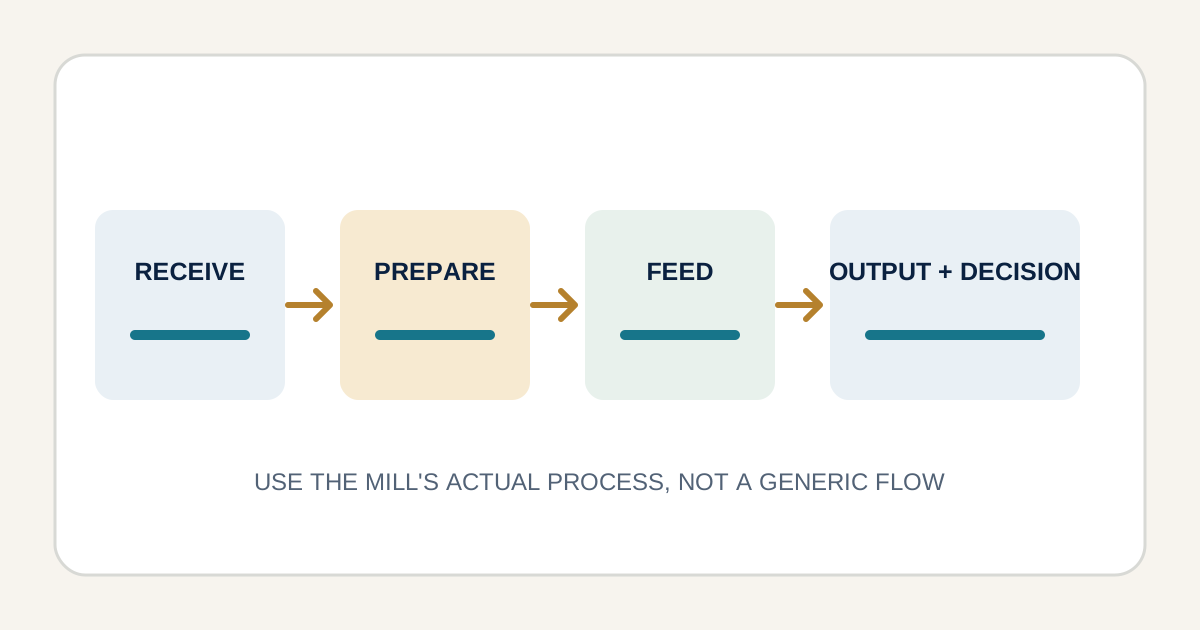
- Receiving: verify the lot, model, package, and delivered condition.
- Preparation: state whether the material is opened, transferred, blended, or conditioned.
- Feed: name the machine entry point, feed controls, and the observation that matters.
- Output: identify the strand, fabric, sheet, or other specimen the buyer will inspect.
- Next process: record any heat, wet treatment, or removal stage relevant to the material's role.
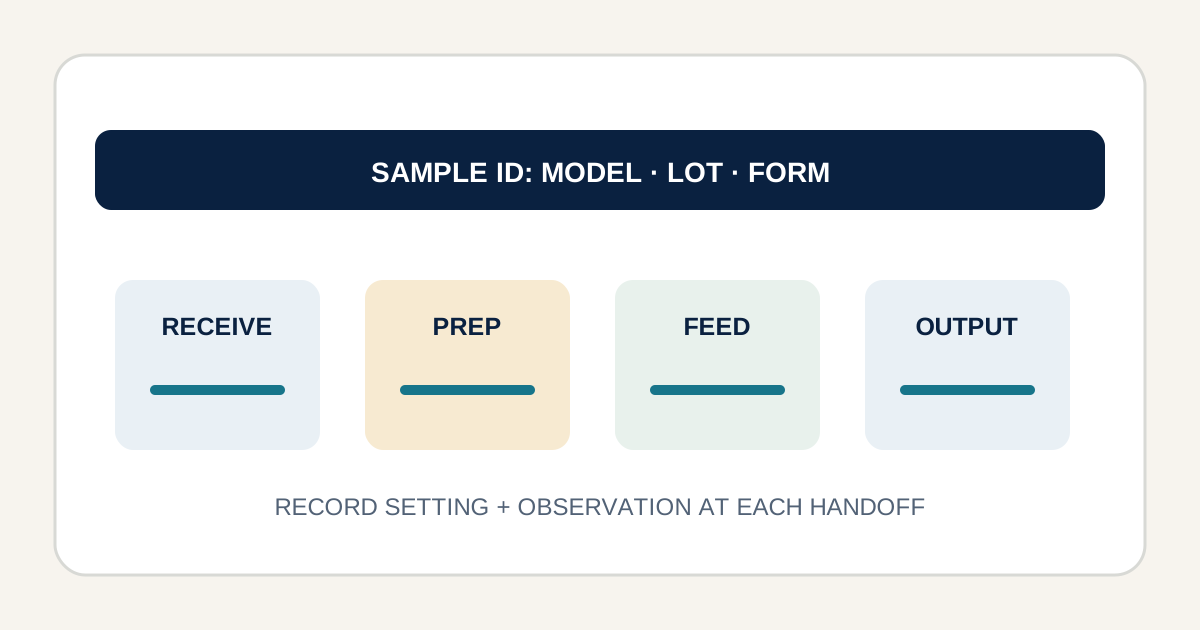
For each handoff, name the person or team that receives the material and the record that follows it. If stock is opened or divided, note the original package identifier on each sub-sample. If another fiber or process aid is introduced, record its identity and the point of addition. A route map should make a change of ownership or material state visible, because a feed observation is hard to interpret if the sample's history disappears between preparation and the machine.
Design a sample that tests the real feed condition
A short hand-pulled sample can confirm that the material is present, but it cannot establish that the intended line can receive and process it. Plan enough material to reproduce the actual preparation and feed steps, and confirm the amount with the supplier before dispatch. If the first sample is too small to reach the downstream operation, label its result as a receipt or handling check rather than calling it a spinning approval.
Keep a reference specimen from the sample as delivered. Identify any material opened, transferred, or mixed during preparation, and preserve the original lot and sample labels through each handoff. If more than one candidate is run, use separate records and mark where the line changes candidate. A blend or intermediate strand made with different inputs should remain traceable to the exact sample and process settings that produced it.
| Check | Trial action | Evidence to retain |
|---|---|---|
| Incoming identity | Match received label to the requested Top model and lot | Label image and receiving record |
| Preparation | Follow the documented opening, transfer, or conditioning route | Operator sequence and settings |
| Feed behavior | Run on the intended equipment and observe the agreed feed points | Machine, settings, interruptions, and sample identity |
| Output | Inspect the intermediate or finished structure named in the brief | Specimen, test method, and acceptance decision |
Measure consistency at the point the process depends on
Decide which measurement answers the process question. The receiving team may need to verify the form and label; a preparation stage may need a repeatable mass or feed check; the downstream textile may need a structural or functional assessment. Use the method the buyer's quality system accepts, with the sample basis and measurement points written down. Do not report a visual impression as a numerical result or infer a machine-wide property from one short section of material.
If the output varies, preserve samples from the start, middle, and end of the run when the process permits. Record where each segment came from and whether the feed settings changed. Compare repeated readings using the same method before changing the product selection. This helps the team see whether variation follows the incoming form, a particular preparation step, the machine route, or an uncontrolled sampling difference; it does not assign a cause without a controlled comparison.
| Concern | Useful measurement point | Do not substitute |
|---|---|---|
| Form is unclear | Receiving sample and written supplier description | A downstream fabric test |
| Feed is intermittent | Observed machine entry and feed path | A package photograph alone |
| Intermediate output varies | Repeated, identified samples from the relevant run sections | One unlabelled average |
| Final product fails its role | The buyer's agreed retained-product or removal endpoint | The fact that the feed step ran |
Choose observations that can be repeated by another operator. For a feed interruption, identify the exact location and event rather than writing only “poor running.” For variable output, label each sample by run position and process settings before comparing it. For a structural concern, define the specimen orientation and the location to inspect. A written observation rule does not need to be complicated; it needs to make two reviewers examine the same evidence in the same way.
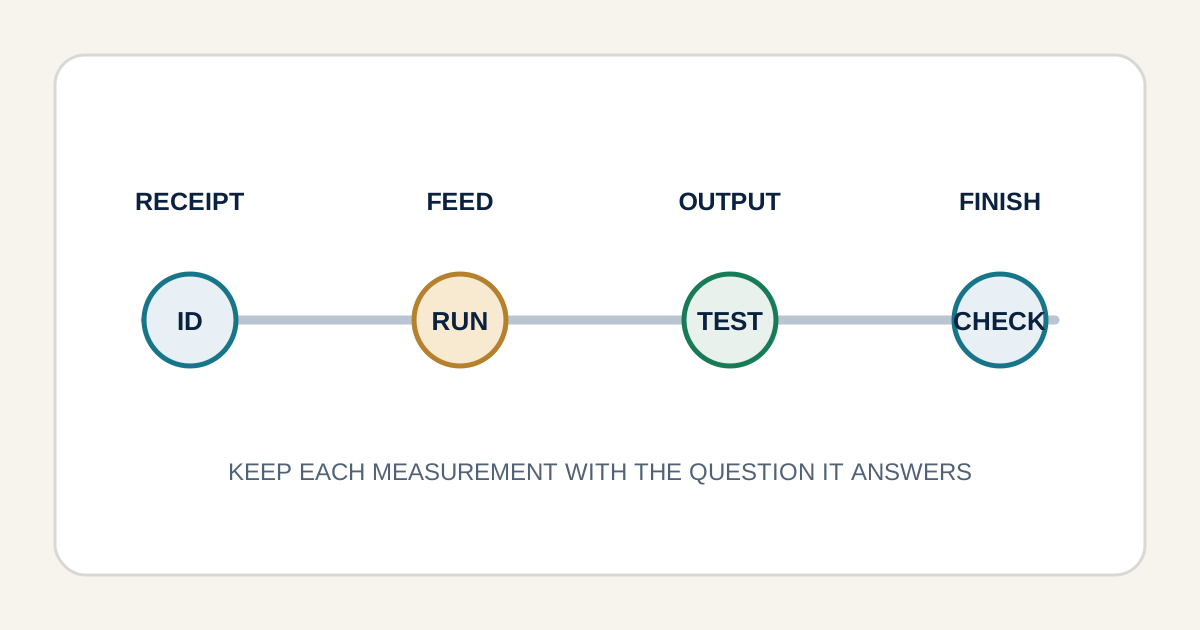
Keep feed performance separate from removal or finished-product approval
A Top-form sample that feeds successfully has answered one question: it entered the tested route under the recorded conditions. If the PVA must support a structure temporarily, the trial still needs to show that it remains functional through the required stages. If it is later removed, evaluate that removal on the representative construction and check the retained product after the agreed finishing sequence. If the material remains, use the buyer's criteria for the component that stays in the article.
Write distinct decisions for receiving form, preparation and feed, intermediate output, and final application. Each decision can have its own record and owner. When a stage fails, the route map shows where the next investigation should begin; a generic “PVA did not work” report does not. Keep the candidate, test conditions, and process stage together when a question is sent to the supplier.
A review sheet can use one row per gate: identity confirmed, incoming presentation accepted, preparation repeated as written, feed observation accepted, output meets its stated purpose, and removal or retention decision complete. Mark each gate as not tested, observed, or approved under the buyer's own system. This prevents a sample that reached only the first machine from being described as fully qualified. It also tells the next reviewer exactly what evidence is still needed before the mill commits more material or production time.
Prepare a sample request the supplier can answer
A useful request includes the catalog's exact Top product identifier, the form the mill needs, the machine route, preparation steps, intended output, and the amount required to reach the relevant trial stage. Add whether the PVA should be retained or removed later, the thermal and wet conditions it will encounter, and how the buyer will judge the result. If “Top” and “sliver” are not interchangeable in the mill's language, explain the distinction and ask the supplier to confirm the delivered form in writing.
The PVA staple fiber page lists the current product groups. Compare the planned route with the fiber-length selection guide and record the full trial conditions using the sample request form.
Frequently asked questions
Is every PVA Top product the same thing as a sliver?
Do not assume so from the catalog label alone. Confirm the physical form, preparation state, and package with the supplier before designing the feed trial.
What does the 76 mm Top entry tell me?
It identifies a length listed under the catalog's separate Top group. It does not by itself specify machine compatibility, feed behavior, blending conditions, or the final result.
How much material should I request?
Request enough to reach the process stage you intend to evaluate, and confirm the quantity with the supplier before shipment. A receiving check should not be presented as a full feed or production trial.
What should I record during a Top feed trial?
Record exact product identity, delivered form, preparation steps, machine route, settings, observations, and output checks. Keep feed, removal, and finished-product decisions separate.